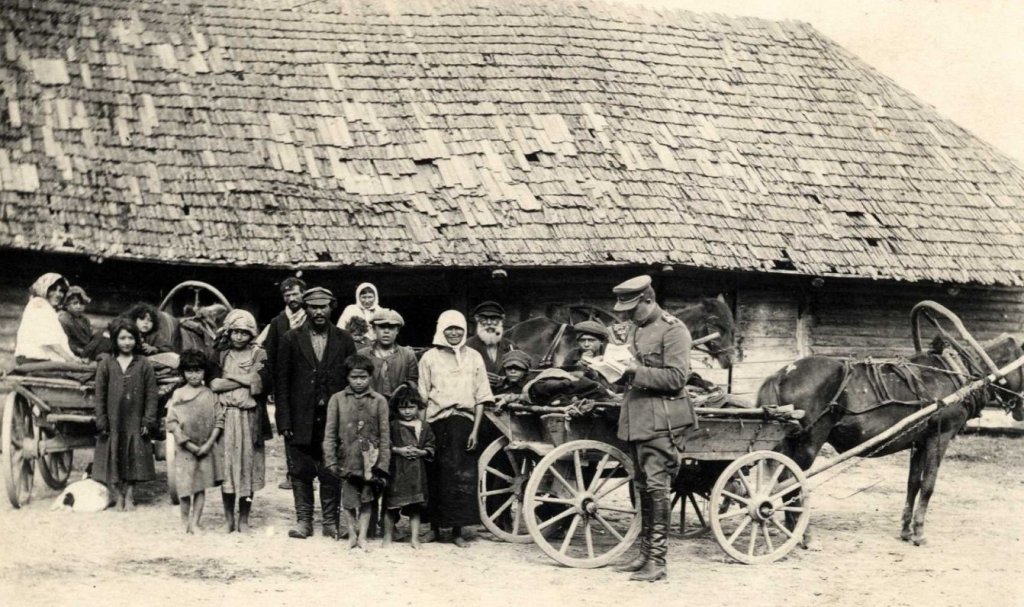
One of the less discussed events of the Latvian history is Roma Genocide that took place in Latvia during Nazi occupation. Called Porajmos in Romani language the Roma genocide was part of the Holocaust directed against Jews, mentally ill, homosexuals and Roma’s who lived in significant populations across the Eastern Europe. The death toll of Nazi killed Roma’s estimated 220,000 to 1,500,000 people. Genocide against Roma took place also in Latvia, where they been living for centuries.
The Roma people have been originated from ancient India and appeared in Europe in Middle Ages as early of 12th century. By practicing nomadic lifestyle they appeared all over Europe including Britain on 16th century. The largest concentrations of them were in Eastern Europe, Poland-Lithuania, Moravia and Wallachia. Roma’s managed to keep their eastern traditions and independent lifestyle often defying the laws of the ruling society. Some Roma communities started continuous settlements. Their differences in looks and culture often sparked hatred and prejudices.
The Nazi movement combined all the prejudices in united policy of hate and persecution. However, Nazis had difficulties labeling all Roma’s as subhuman (Untermenchen) because of their “Aryan origin” that Nazis considered the prime race. Also it was inconvenient that most consequent nomadic Roma’s were those of “most purest Aryan”. To “solve” the problem the racial specialist Dr. Robert Ritter lead research team to determine the racial status of Roma people. By examining 2000 people they came to conclusion that 90% of Roma are mixed with other Europeans and therefore sent to “mischlinge” (crossbreeds) category. They were labeled as anti-social and dangerous to the Nazi regime. This conclusion now made 90% of Roma’s in danger of persecution. The 1935 Nuremberg racial laws were also applicable to Roma’s. First group of German Roma’s were sent to Dachau camp on 1936. The Dr. Ritter’s “research group” considered Roma’s to be sterilized and excluded from the society; that also applied to the “racial pure” Roma. On 1937 all Roma were ordered to move to special containment camps (Zwangswohnlager) and on 1938-1939 even more Roma’s were “preventively arrested” and sent to concentration camps. The start of the World War II opened the extermination phase as Roma’s were deported to the occupied Poland where their extermination begun. On December 16 1942 Heinrich Himmler ordered to send all Roma’s and mixed ones to Auschwitz death camp. Before that on 1941 when Nazi Germany invaded Soviet Union the extermination of the local Roma have already begun.
It’s not known when Roma’s settled in Latvian territory. Possibly after 1561 when former Livonian Confederation became part of Poland-Lithuania. The Romani language in Latvia has four dialects, in Courland (Kurzeme) and Semigallia (Zemgale) most common is so called “Latvian romani” (lotfitka roma), in Latgale the “Northern Russian romani” (xaladitka roma) and Belarusian and Polish language affected Romani. The last Latvian national census in 1935 counted 3839 Romas. 234 lived in Riga. Large concentrations of them were in Jelgava, Daugavpils, Talsi, Ventspils, Rēzekne, Valmiera, and Tukums. Large numbers of them lived in regular homes. While encountering usual prejudice; labeling as “horse thieves”, “vagrants” and “tax and army service evaders” no serous acts of violence against Roma were ever recorded in Latvia. Latvians called Roma Čigāni (the gypsies) and this therm was used in press and official documents.
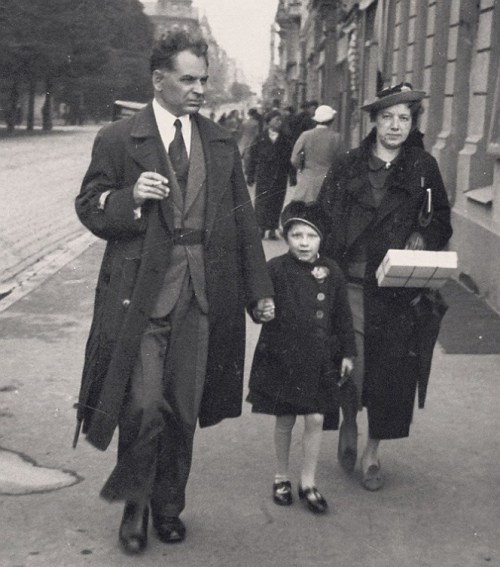
Kārlis Krūminš the savior of the 200 Roma at Talsi district
Its possible the Roma population in Latvia was larger then according to the 1935 census data. On June 1941 there could have been about 12 000 Roma people living in Latvia. The first killings were made by the German Einsatzgruppen and assisting Latvian collaborator units. One of the first killing sites were Baltinava township in Eastern Latvia were 10 Roma families – 43 people were murdered in August 1941. The Roma genocide really started on December 1941 when Nazis had finished the genocide of the Latvian Jews. 90 people were killed in Kalvene parish near town of Aizpute in Western Latvia. In Liepāja the full list of murdered Roma’s were found, only one such in Latvia. 100 Roma’s are mentioned in Nazi report to be shot in the Ciecere parish. The 1935 data had 176 Roma’s living in Liepāja. Tukums a city located between Kurzeme (Courland) and Zemgale region had large population of Roma. Inconclusive reports from interrogated Nazi suspects states that about 200-300 Roma’s were killed. Tukums had 233 Roma’s on 1935. The town of Bauska near Lithuania border had fairly large Roma population. It’s known that 250 people of all ages were killed in Jaunsaule parish. The people from nearby township of Skaistkalne were also murdered there. Fourth largest city Jelgava had 401 Roma’s 200 of them were destroyed although the data is inconclusive. 200 Roma’s were possibly killed in Ludza district in Latgale region. The heart town of Latgale Rēzekne had 130 Roma’s arrested on January 5 1942 and possibly concentrated in former synagogue or empty shop space nearby and then murdered at Garbari forest near Zvirgzdene township. During the Audriņi massacre on January 2,4 1942 when Germans murdered 215 local villagers for hiding the soviet partisans, several Roma’s were killed who lived nearby. 50 Roma’s were shot near the Valmiera concentration camp. There is very fewer details about the Roma genocide in Riga. It’s possible that Romas were shot in Jugla, Strazumuiža, Biķernieki Forest, Strazdumuiža railway station and other parts of Riga. Similarly fewer details are about the fate of Roma’s in Daugavpils where is known that 5 Romas were shot in the Daugavpils prison. Similar obscure details are about Ventspils.
Current research estimates conclude that about 2000 Latvian Romas were killed during the Nazi occupation. Half of the Roma 3839 population of 1935. As mentioned the real size of the Roma population on 1941 could be more larger than official data meaning the number of victims could be larger than 2000 people.
Used Sources:
Rudēvičs, Normunds. (2015) Romu Holokausts Latvijā. Konferenču un semināru materiāli 2009-2014. Shamir. Rīga, 2015
Vestermanis, Marģers. Čigānu genocīds vācu okupētajā Latvijā (1941.-1945). Latvijas Vēsture 1993/4 (11)
Urtāns, Aigars (2003), “Bauskas pilsētas un apriņķa čigānu iznīcināšana 1942. gada vasarā”, in: Dzintars Ērglis (ed.), Holokausta izpētes jautājumi Latvijā: Staptautiskā semināra referāti 2001. gada 29. novembris, Rīgā, un 2001.–2002. gada pētījumi par holokaustu Latvijā / The Issues of the Holocaust Research in Latvia: Reports of an International Seminar 29 November 2001, Riga and the Holocaust Studies in Latvia in 2001–2002.
http://www.la.lv/romu-glabejs-talsos%E2%80%A9-krumins/
http://www.ntz.lv/dazadi/mums-nevajag-atvainosanos-tikai-3-faktu-atzisanu/


Leave a comment